By Eve Destais
Welcome to DRESS CODE your inside guide to fashion
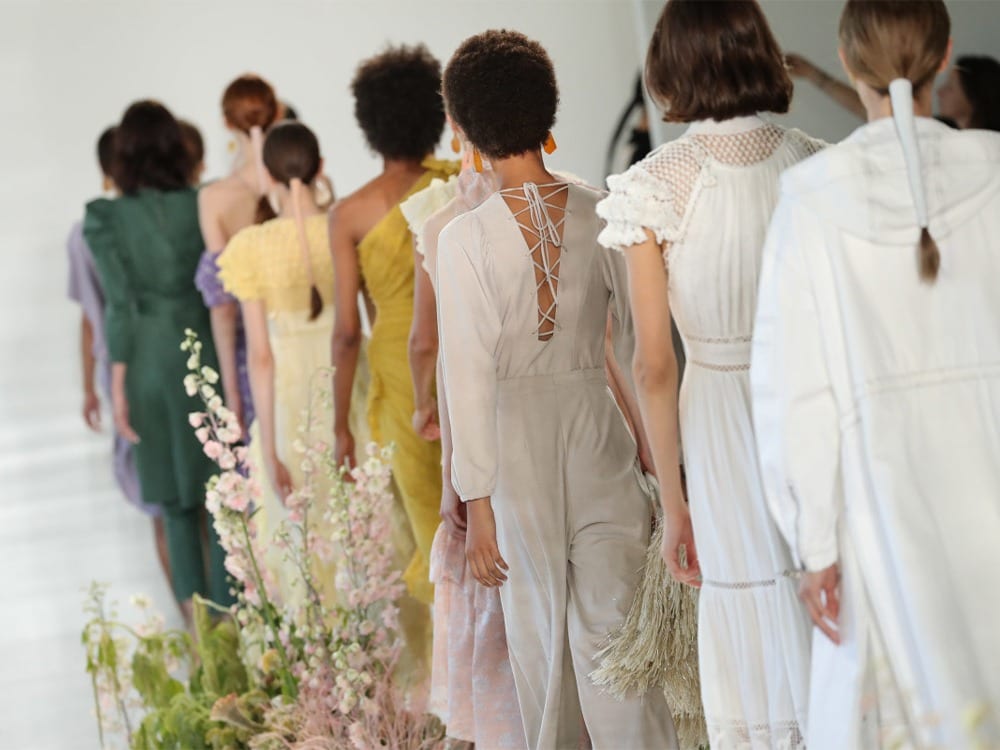
| DIOR SS2O PAYS TRIBUTE TO NATURE AND THE ENVIRONMENT |
In September 2019, Dior presented their ready to wear Spring Summer 2020 and Elle magazine published an article acknowledging the artistic direction of the décor.
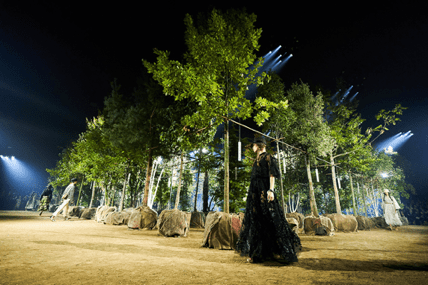
Dior transformed the Hippodrome de Longchamp in Paris into a “woodland garden” with real trees,making an environmental statement (image 1).Dior is already known for making feminist statements on the runway and red carpets. 164 trees were featured and they “will continue their journey after the show, joining sustainability projects around Paris. Each tree was tagged with a story of its origin and future destination.”

Furthermore, nature was not only the theme of the setup of the collection but also the inspiration behind the clothes.
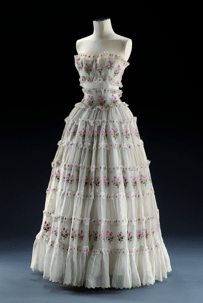
The collection had many floral prints,loose and organic silhouettes by Maria Grazia Chiuri (image 2). This is also a homage to Christian Dior who, was himself very much inspired by nature and flowers (image 3), plants and nature were very special to him.
In terms of PESTEL factors, Dior has incorporated a lot of the environmental factor into their brand image. “Dior has also set an absolute target to reduce emissions generated from its owned operations by 25% but hasn’t set a target covering its supply chain.” (Solene Rauturier, 2019). However, Dior is not up to par with other luxury brands taking more drastic sustainability action such as Stella McCartney which can truly be called a sustainable luxury fashion brand
| CAN FAUX FUR BE MADE SUSTAINABLE ? |

Welcome back to Dress Code! Today’s blog post is all about making luxury sustainable garments. On September 30th2019, Vogue Business published an article about how british eco-friendly fashion designer, Stella McCartney, is debuting an alternative faux fur: Koba. Koba is «a corn byproduct blended with recycled polyester ».
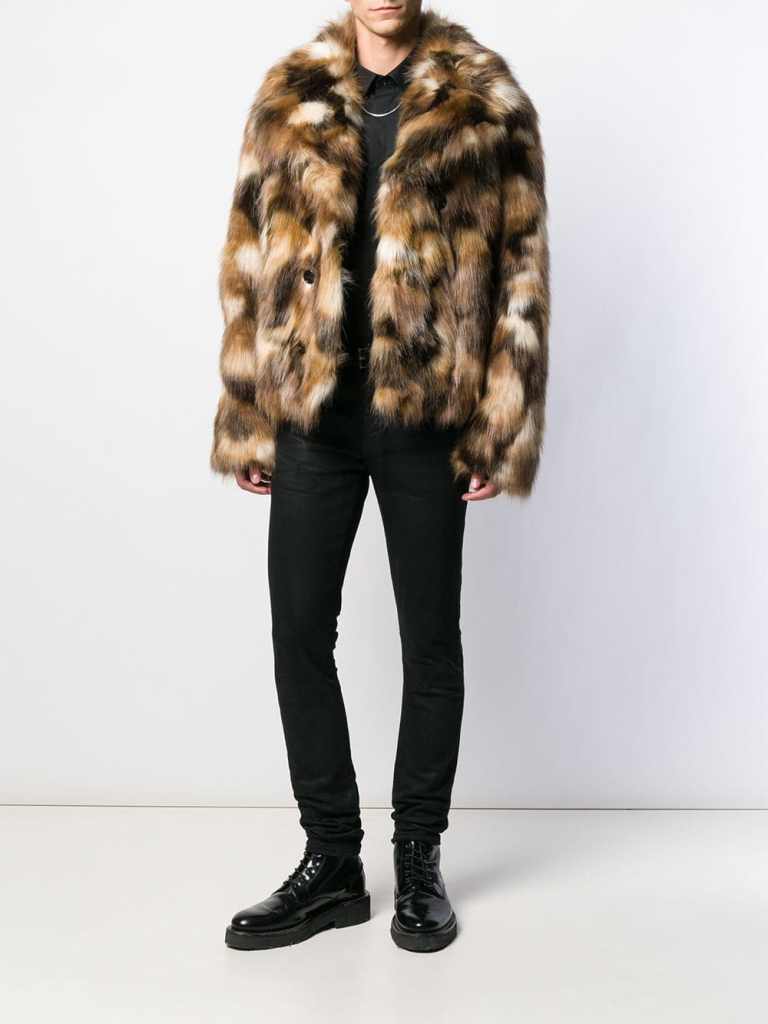
Most current faux furs are made from petroleum-based products and modacrylic which are lower in quality. According to the article, «Koba reduces the material’s total carbon footprint while elevating its quality to a calibre that fits the needs of a luxury brand. » In addition, Koba is a recyclable product that «uses up to 30 per cent less energy and produces 63 per cent less greenhouse gas emissions than polyester». Stella McCartney hopes to urge other brands to take the same initiative and switch to Koba. This new material will hopefully hit stores in 2020.
Within this article are visible a number of the PESTEL factors such as Political, Environmental and Social. In terms of the political factor, according to the BBC «Fur farming was banned in the UK in 2000, but it is legal to sell some types of real fur that have been imported, if it is accurately labelled. »

The environmental aspect is the most visible with all the sustainable aspects that this new initiative has. Given that the fashion industry is responsible for 20 % of global wastewater and 10% of global carbon emissions(United Nations Environment Programme, 2020), small changes like these can add up and help reduce the pollution caused every year by the fashion industry. Regarding the social factor, real fur and unsustainable faux fur has become a shamed practice which raises indignation and protest. A sustainable alternative will be very well received by the public.
| MORE ON STELLA MCCARTNEY |
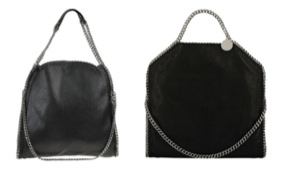
In addition to being an indubitable example of ethics and sustainability, Stella McCartney has also proved her distaste of copyright infringement and copying. In 2015 she launched a lawsuit against Steve Madden.
She accused them of producing a cheap versionof her iconic “Falabella” bag. Steve Madden’s version is 70£ and the originals start at 475£.

She accused them of producing a cheap versionof her iconic “Falabella” bag. Steve Madden’s version is 70£ and the originals start at 475£. According to a Vogue UK article, after the success of her bags Stella McCartney obtained design patent protectionfor its design and Steve Madden “began importing and selling a tote bag, that was virtually identical in appearancebut lower quality.” She ultimately won the lawsuit against Steve Madden. This would fit in to the Legal factor of PESTEL.
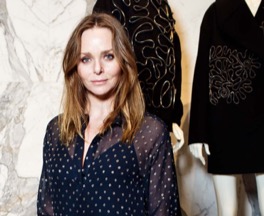
Stella McCartney has proved she takes great pride in her work and is creative, ethical and strong minded. She has, in addition, “bought back the 50 per cent of her business owned by luxury conglomerate Kering” according to a Vogue UK article published in March of 2018. She now alone owns the entirety of her company.This element fits in to the Economic factor of the PESTEL framework.
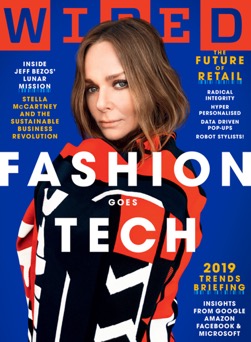
Now, last but not least, Technological. As we all know, Stella McCartney is definitely an innovative, creative and forward-thinking brand therefore technology must be present somehow given this day and age. The Independent published in May 2019 an article about Stella McCartney teaming up with tech giant Google in an effort to “help reduce the environmental footprint of the fashion industry.” and “improve sustainability in the fashion supply chain”.
 DRESS CODE